
Rhinoplasty, often called a nose job, is an operation that reshapes the bone and cartilage of the nose so that it is in harmony with the face. Problems that make breathing difficult, such as a deviated septum, are corrected in the same operation when needed. The aim is a balanced nose that suits the natural proportions of your features, keeps the character of your face and lets you breathe comfortably; results vary from person to person.
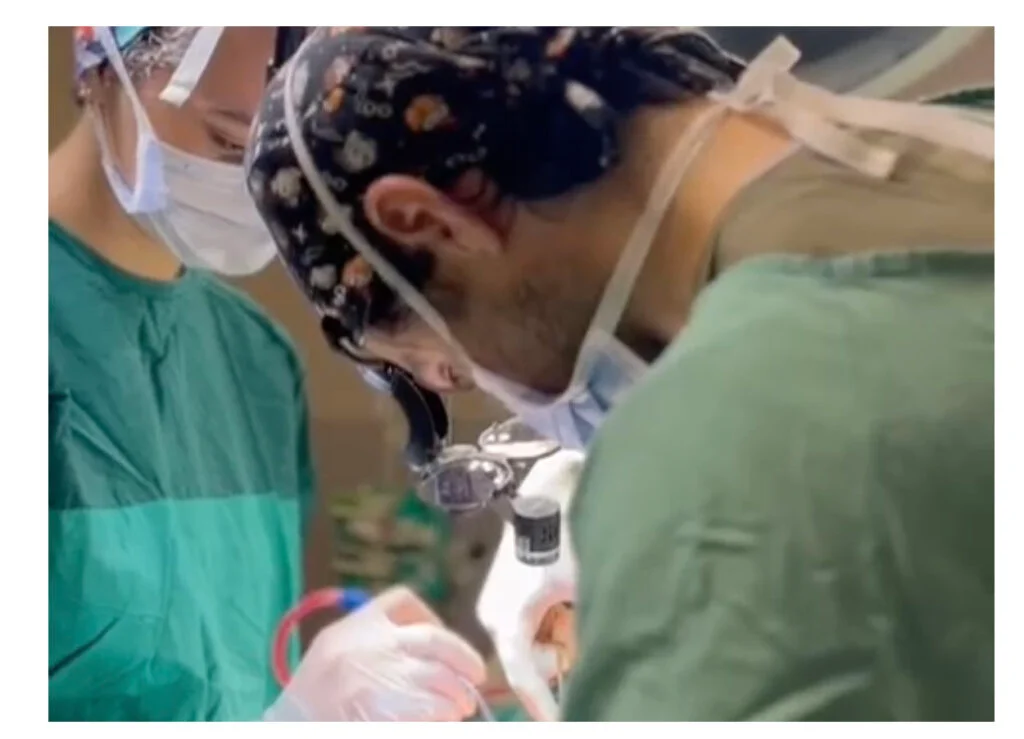 The results of any surgical or interventional procedure vary from person to person. You are advised to get your physician’s detailed opinion before the procedure.
Rhinoplasty at a Glance
| Topic | Typically |
|---|---|
| Anaesthesia and length of surgery | General anaesthesia; 2–4 hours (a revision can take longer) |
| Hospital stay | One night for observation |
| Splint and any packing | Removed on day 5–7 |
| Back to desk work and social life | 10–14 days |
| Strenuous exercise | Gradually from weeks 4–6, once your surgeon agrees |
| Glasses | Not rested on the bridge of the nose for the first 2–3 months; contact lenses can be worn |
| Final shape of the nose | 6 months to 1 year; up to 1.5 years with thick skin |
| Age | Once bone and cartilage have finished developing: around 17–18 for women and around 18 for men |
These are general ranges; the plan that applies to you is set at the examination.
What Is Rhinoplasty?
Rhinoplasty is the medical name for surgery that reshapes the cartilage and bone of the outer nose so that it fits the overall proportions of the face. It covers many different aesthetic changes, such as smoothing a hump on the bridge, lifting or refining the tip, correcting asymmetric nostrils and redefining the angle of the nose.
A successful operation is about more than a change on the surface, however. A crooked wall inside the nose (deviated septum), enlarged turbinates (turbinate hypertrophy) and narrowed airways can be treated at the same time, during the same operation. Rhinoplasty is therefore a comprehensive treatment that brings functional and aesthetic goals together in a single operation.
Who Is a Good Candidate for Rhinoplasty?
Good candidates are people whose general health does not stand in the way of surgery, who are unhappy with the shape of their nose or with how well they breathe, and who have realistic expectations.
- People whose nose has finished growing: the bone and cartilage of the nose must have completed their development. This is usually around 17–18 for women and around 18 for men.
- People with breathing problems: those with chronic nasal blockage, snoring or difficulty breathing caused by a deviation inside the nose.
- People who have injured their nose: patients whose nose has been knocked off-centre or broken in a fall, a blow or an accident.
- People with cosmetic concerns: those bothered by a hump, a drooping tip, wide nostrils or a nose that is out of proportion with the face.
For men, different aesthetic criteria apply, such as a straighter bridge and a tip that is not turned up too far; you can find the details on the male rhinoplasty page. If you have had nose surgery before, planning is different because of scar tissue and altered anatomy; this is covered on the revision rhinoplasty page.
When Surgery May Need to Be Postponed
A chronic illness that is not under control, an active nasal or sinus infection, a tendency to bleed, or a nose that has not yet finished developing may mean that surgery has to be postponed. Nor is the decision rushed when expectations are unrealistic, or when it seems to come more from other people’s pressure than from your own wish. Smoking is always discussed before surgery, because it can impair healing. Whether surgery is right for you is decided only after all of these points have been assessed at the examination.
Types of Rhinoplasty: Open and Closed Technique
Every patient’s anatomy, skin thickness and aesthetic goals are different. Rhinoplasty is therefore planned individually, using one of two basic techniques: open rhinoplasty or closed rhinoplasty. A piezo device for shaping bone, a preservation approach in suitable noses and septorhinoplasty for breathing problems can each be combined with either technique.
Open Rhinoplasty
In the open technique, a small incision is made across the lower part of the columella, the strip of tissue that separates the nostrils. The skin of the nose is lifted so that the cartilage and the bony framework underneath can be seen directly.
- Advantages: it gives the surgeon a wide view. Especially in noses that are severely crooked, have been operated on before (revision) or need complex cartilage shaping, it allows the structures to be shaped under direct vision.
- Healing: the incision scar usually fades within 6–12 months; how visible it stays depends on your skin and varies from person to person.
Closed Rhinoplasty
In the closed technique, all incisions are made inside the nostrils. No incision is made in the outer skin of the nose.
- Advantages: there is no stitch scar on the outside. Because the soft tissues and the network of blood vessels and nerves over the bridge are disturbed less, there is usually less swelling and bruising after surgery.
- Healing: recovery may be slightly quicker than with the open technique.
Feature | Open rhinoplasty | Closed rhinoplasty |
Incision site | Under the nose (columella) and inside the nose | Inside the nostrils only |
Surgeon’s view | Direct and wide | Through the nostrils (endonasal), more limited |
Scarring | A small scar that fades over time | No scar visible from the outside |
Mainly used for | Severe deviation and revision cases | Mild to moderate cosmetic reshaping |
Swelling and recovery | Early swelling may be a little more noticeable | Early swelling is usually less; getting back to social life may be slightly quicker |
Which technique is used is decided at the examination, based on the structure of your nose, the extent of the change and the characteristics of your skin; there is no single right technique for every nose. Who the closed technique suits, its limits and what recovery involves are explained in detail on the closed rhinoplasty page.
Piezo (Ultrasonic) Rhinoplasty
The piezo device is an alternative to conventional surgical instruments (hammer and chisel) for shaping bone, and works with ultrasonic vibrations. Because it is designed to act mainly on bone, the surrounding soft tissues, blood vessels and nerves are affected less. Bone can be shaped in a more controlled way, which may help to limit bruising and swelling in the early period; recovery time and the final result, however, vary from person to person. Which noses piezo is used for is explained on the piezo rhinoplasty page.
Preservation Rhinoplasty
In preservation rhinoplasty, the aim is to correct the hump and reposition the nose while keeping the bridge and its supporting tissues intact as far as possible. In a suitable nose, the goal is a natural-looking line along the bridge; not every nose is suited to this approach, however. The structure of the bridge, the size of the hump and the condition of the septum are assessed at the examination, and you and your surgeon decide together whether the preservation approach or conventional structural reshaping suits your nose.
Nose Tip Surgery (Tipplasty)
Nose tip surgery (tipplasty) deals with the tip of the nose only: a drooping tip can be lifted, a wide tip refined, and an ill-defined or weak tip given more definition with cartilage support. If there is a marked hump on the bridge, a crooked nose or a breathing problem, correcting the tip alone may not be enough; the nose is then planned as a whole. Limited tip corrections can be done with the closed technique, whereas when the tip has to be rebuilt, the open technique usually gives more control. Who it suits, how it is done and what recovery involves are explained on the nose tip surgery (tipplasty) page.
What Can Be Done for Different Nose Shapes?
- Nose with a hump: the hump on the bridge is reduced by rasping down bone and cartilage or, in suitable noses, with an approach that preserves the bridge; a piezo device can be used to shape the bone. Taking the hump off completely and leaving a scooped bridge does not suit every face; how much of the hump to remove is planned according to the rest of the face.
- Wide nose: if the width comes from the nasal bones, the bones are narrowed; a wide tip is refined by reshaping the cartilage. If the nostrils need to be made smaller, a fine scar may remain in the natural crease where the nostril meets the cheek.
- Crooked nose: an outer curve is often accompanied by a deviated septum; the bones and the septum are corrected together (septorhinoplasty). Where the nose is markedly crooked, the open technique usually gives more control.
- Large or long-looking nose: the nose is reduced in proportion to the face, and the tip is lifted if needed. An over-reduced nose can look artificial; the goal is not the smallest possible nose but one in balance with the face.
Nose filler, also known as a non-surgical nose job, can temporarily disguise a small dip or a slight hump on the bridge; it does not, however, make the nose smaller, straighten a crooked nose or correct a breathing problem.
Deviated Septum and Nose Reshaping in One Operation: Septorhinoplasty
A nose that looks good on the outside but does not let you breathe comfortably cannot be called a successful result. The main aim of the operation is a nose that both looks good and works well. Septorhinoplasty means straightening the cartilage and bone of the septum, the wall that divides the inside of the nose in two, and reshaping the nose cosmetically in the same operation.
Part of the crooked septal cartilage that narrows the airway is straightened or removed; where suitable, this cartilage is reused as a graft to support the tip or to shape the bridge. In this way, using your own tissue, the aim is both a natural appearance and easier airflow through the nose. Septal cartilage is usually the first choice for grafts; when there is not enough, ear or rib cartilage is considered. Taking cartilage from another part of the body adds a separate surgical step to the operation. How a deviated septum is treated together with cosmetic correction is explained in detail on the septorhinoplasty (deviated septum surgery) page.
Rhinoplasty Techniques and Guides
The different techniques and the questions patients ask most often are covered in detail on separate pages:
- Closed rhinoplasty: who the technique with all incisions inside the nose suits, its advantages and its limits.
- Piezo rhinoplasty: shaping the nasal bones with an ultrasonic device, and how this affects recovery.
- Male rhinoplasty: planning that suits a male face and avoids over-reduction.
- Revision rhinoplasty: correcting a nose that has been operated on before, the right timing and the need for cartilage grafts.
- Rhinoplasty cost: the factors that affect the fee, and how it is set after the examination.
- Rhinoplasty recovery: day-by-day healing, swelling, the splint, glasses, sport and returning to work.
- Nose tip surgery: who an operation that reshapes only the tip suits, and its limits.
- Septorhinoplasty: correcting a deviated septum and the outer shape of the nose in the same operation, and how it differs from septoplasty.
- Non-surgical nose job: what nose filler can and cannot correct, and its risks.
How Is Rhinoplasty Performed? Step by Step
The process runs in several stages, from the first examination until the nose settles into its final shape. The examination takes place at the practice in Teşvikiye, Şişli, Istanbul; the operation is performed in a fully equipped hospital licensed by the Ministry of Health.
1. Detailed Consultation and Facial Analysis
At the first consultation, your concerns, expectations and medical history are discussed. The physical examination looks closely at the thickness of the skin over the nose, the strength of the cartilage and the airway inside the nose. Skin thickness directly affects the plan: thick skin hides fine detail and holds swelling for longer, while on thin skin small irregularities are easier to notice. Why the framework is not over-reduced under thick skin, and how the tip is supported, are explained in the rhinoplasty for thick skin section of the male rhinoplasty page.
2. Digital Simulation and Planning
Digital simulations are prepared on photographs of your face taken from different angles. A profile that suits your face is planned by assessing how the nose relates to the cheekbones, the chin and the forehead. This stage helps you and your surgeon to agree on clear expectations; a simulation is a planning tool, however, and does not mean that the result of surgery will match it exactly. You can read how a natural look is planned in our guide to natural-looking rhinoplasty.
3. Preparing for Surgery: Which Tests Are Needed?
Before surgery, blood tests and an anaesthetic assessment are carried out; depending on your age and general health, further tests or an opinion from another specialist may be requested. Informed consent is obtained after the scope of the operation, the possible risks and the recovery have been discussed. Because blood thinners and some herbal products and supplements can increase the risk of bleeding, tell your surgeon about every medicine you take; where necessary, they are adjusted before surgery on your surgeon’s advice. If you smoke, stopping for at least a few weeks before and after surgery is recommended.
4. The Day of Surgery
The operation is performed under general anaesthesia and usually takes 2 to 4 hours, depending on what needs to be done. At the end, a protective splint is placed over the bridge of the nose; if needed, soft silicone packs with a central channel you can breathe through are placed inside the nose.
5. Overnight Observation and the First Week
One night of observation in hospital is usually recommended. In the first days there may be swelling and bruising around the nose and eyes; during this time you rest with your head raised and take the medicines you have been prescribed. The splint and any silicone packs are usually removed at a check-up on day 5–7.
6. Follow-Up Visits and the Final Result
Once the splint is off, follow-up visits are planned according to how you are healing. The swelling goes down gradually over the months and the nose approaches its final shape. Whether any further correction is needed can only be judged once healing is complete, usually after waiting at least a year.
Aftercare: What to Watch Out for After Surgery
Following the aftercare advice plays an important part in a smooth recovery.
- First 48 hours: keeping your head raised (sleeping on two pillows) reduces swelling. Cold compresses around the eyes help to reduce swelling and bruising.
- First week: the silicone packs inside the nose and the external splint are removed on day 5–7. Light taping is then applied over the nose.
- First month: avoid strenuous sport, saunas, steam rooms and direct sunlight. Glasses are not recommended for the first 2–3 months; contact lenses can be worn instead.
- Full recovery (6–12 months): it usually takes 6 months to 1 year for the nose to reach its final shape and, in particular, for the last subtle swelling at the tip to disappear completely; with thick skin this can take up to 1.5 years.
This list is a general summary; medicines, dressings and follow-up dates are given to you individually, according to the operation you have had. For details such as day-by-day healing, how the swelling evolves, glasses, sport and going back to work, see our rhinoplasty recovery guide.
What Are the Risks of Rhinoplasty?
Like any surgical procedure, this operation carries risks. Some are a normal, temporary part of healing; others are uncommon and may need further treatment. The main ones to know about before you decide on surgery are:
- Temporary effects: swelling, bruising, a blocked feeling in the nose, a temporarily reduced sense of smell, and temporary numbness of the nasal tip and upper lip.
- Bleeding and haematoma: slight oozing is expected in the first days; rarely, bleeding or a collection of blood may need further treatment.
- Infection: this can rarely develop despite sterile conditions and the precautions taken.
- Anaesthetic risks: these are reviewed at the anaesthetic assessment before surgery.
- Asymmetry or a result that does not match your expectations: tissues heal differently in every patient, and small irregularities can occur.
- Scarring: with the open technique, the scar from the small incision on the columella usually fades over time; rarely, it stays more noticeable.
- Difficulty breathing: usually temporary; rarely, it can persist and may need further treatment.
- Septal problems: in patients who have had the septum corrected, a hole in the septum (perforation) can rarely develop.
- Need for a further correction (revision): some patients may need a second procedure once healing is complete.
The risks that apply to you are discussed in detail at the examination, taking into account the structure of your nose and your general health. Surgical results vary from person to person; realistic expectations are an important part of being satisfied after surgery.
What Determines the Cost of Rhinoplasty?
The fee is not the same for everyone. The main factors are the scope and length of the operation, the technique used, whether functional problems such as a deviated septum or enlarged turbinates are corrected in the same operation, the need for cartilage grafts, whether you have had nose surgery before, the anaesthesia and the length of the hospital stay. The exact fee is therefore set after the examination, together with your personal treatment plan. The cost factors in detail, and information for patients insured under the Turkish social security system (SGK), are on the rhinoplasty cost page.
Travelling to Istanbul, Turkey, for Rhinoplasty
Before you travel, you can send photos on WhatsApp for a preliminary assessment and receive the proposed plan in writing. The examination and the operation plan are then made in person in Istanbul, the operation takes place in a fully equipped hospital licensed by the Ministry of Health, and your surgeon decides when you are fit to fly home; for rhinoplasty, a stay of about 6–7 nights is typical. Once you are home, follow-up continues with photo reviews on WhatsApp, and your medical records are given to you in English. To plan your visit, contact the practice.
Frequently Asked Questions about Rhinoplasty
What types of rhinoplasty are there?
Rhinoplasty is not one single operation; it can be classified in several ways. By where the incisions are made, there is open and closed rhinoplasty; by the instrument used to shape bone, the conventional method or piezo; by approach, preservation rhinoplasty, which keeps the bridge intact, or structural reshaping. By purpose, there is cosmetic rhinoplasty, which changes only the appearance, septorhinoplasty, which also corrects the airway, and nose tip surgery (tipplasty), which deals only with the tip. A first operation is called primary rhinoplasty, and correcting a nose that has been operated on before is called revision rhinoplasty. Which of these suits you is decided at the examination, based on the structure of your nose.
How long does the operation take?
The operation is performed under general anaesthesia and usually takes 2 to 4 hours. The time depends on the extent of the change and on whether septal correction or cartilage grafts are needed; it can take longer in a nose that has been operated on before (revision). One night of observation in hospital is usually recommended afterwards.
At what age can you have rhinoplasty?
The bone and cartilage of the nose must have finished developing. This is usually around 17–18 for women and around 18 for men; candidates under 18 also need the consent of a parent or legal guardian. There is no fixed upper age limit: later in life, general health and skin quality are what matter. Suitability is assessed individually at the examination.
Is rhinoplasty a difficult operation?
For the patient, rhinoplasty is an operation under general anaesthesia that usually involves one night of observation in hospital; the first week is spent with a splint, and most people are back at desk work within 10–14 days. The part that takes patience is the swelling at the tip, which settles over months. For the surgeon, it calls for detailed planning: changes of a millimetre show on the face, and breathing must be preserved while the appearance is changed. Factors specific to you, such as thick skin, a markedly crooked nose or previous surgery, are assessed at the examination.
Does rhinoplasty hurt?
Because the operation is performed under general anaesthesia, you feel no pain during the procedure. Afterwards, most patients describe a feeling of fullness, pressure and congestion in the nose rather than sharp pain. This discomfort is usually most noticeable in the first few days and is controlled with the painkillers your surgeon recommends. Having the packs and splint removed can be briefly uncomfortable; how much pain people feel varies from person to person.
How soon can I get back to normal life after a nose job?
The splint and packs are usually removed on day 5–7. Most people can return to desk work and social life within 10–14 days, by which time most of the visible bruising has faded. Strenuous exercise and physically demanding work are usually resumed gradually after weeks 4–6, once your surgeon agrees; for sports with a risk of a blow to the nose, you may need to wait longer. For a day-by-day timeline, see the rhinoplasty recovery guide.
When does the nose settle into its final shape?
Most of the swelling goes down in the first weeks and months, and within a few months the nose is close to its final shape. For the nose to settle completely usually takes 6 months to 1 year. With thick skin, the subtle swelling at the tip can take up to 1.5 years to resolve, and after revision surgery even longer. The final result is therefore judged only once healing is complete.
Is a nose job permanent? How long does it last?
Changes made to the bone and cartilage do not wear off after a certain time. The face does, however, keep changing with age: ageing, significant weight changes or a blow to the nose can affect how the nose looks over the years. Rarely, tissues heal into a different shape than expected, and a further correction may be needed.
Will there be a scar?
With the closed technique, all incisions are made inside the nose, so there is no scar visible from the outside. With the open technique, the scar from the small incision across the columella (the strip of tissue between the nostrils) usually fades within 6–12 months; how a scar forms depends on your skin and varies from person to person. If the nostrils need to be made smaller, a fine scar may remain in the natural crease where the nostril meets the cheek.
Does rhinoplasty affect breathing?
The inside of the nose is also assessed when the operation is planned. The aim is to preserve breathing while changing the appearance. A deviated septum can be corrected in the same operation (septorhinoplasty), and enlarged turbinates can also be reduced at the same time if needed. A blocked feeling caused by swelling is normal in the first weeks and eases as you heal. Rarely, lasting difficulty breathing can develop, in which case further treatment may be needed.
What is the difference between septorhinoplasty and septoplasty?
Septoplasty straightens the wall inside the nose (the septum) to open up the airway; it does not change how the nose looks from the outside. Septorhinoplasty adds reshaping of the outer nose to the septal correction; who it suits and what recovery involves are explained on the septorhinoplasty page. Nose operations that aim to improve breathing are also called functional rhinoplasty. For patients insured under the Turkish social security system (SGK), the cosmetic part of the operation is not covered; details on rhinoplasty under SGK and in Turkish state hospitals are on the cost page.
Can I have rhinoplasty if my nose is blocked?
That depends on the cause of the blockage. Structural causes such as a deviated septum or enlarged turbinates can be treated in the same operation as the cosmetic correction. If you have an active infection such as a cold, flu or sinusitis, surgery is usually postponed until you have recovered; with conditions such as allergic rhinitis, treatment can be arranged before surgery. The cause of the blockage is identified at the examination by looking inside the nose.
What kind of doctor should I see for rhinoplasty?
In Turkey, rhinoplasty is performed by specialists in aesthetic, plastic and reconstructive surgery and by ear, nose and throat (ENT) specialists. When choosing a doctor, it is worth looking at their specialist training and their experience in nose surgery, checking that the operation takes place in a hospital licensed by the Turkish Ministry of Health, and making sure that the risks, recovery and expectations are discussed openly at the examination. Op. Dr. Ayberk Akçay is a specialist in aesthetic, plastic and reconstructive surgery; you can read about his training and work on the About page.
Rhinoplasty Consultation in Şişli, Istanbul
Planning a natural-looking nose that respects the character of your face and lets you breathe comfortably starts with a face-to-face examination. Examinations take place by appointment at the practice in Teşvikiye, near Nişantaşı (Hakkı Yeten Street, Şişli, Istanbul); the structure of your nose, your breathing and your expectations are assessed together, and the technique that suits you is discussed at this visit. Dr. Akçay is a plastic, reconstructive and aesthetic surgeon, a Fellow of the European Board of Plastic, Reconstructive and Aesthetic Surgery (EBOPRAS) and a full member of the Turkish Society of Plastic, Reconstructive and Aesthetic Surgeons.
If you are coming from outside Istanbul or from abroad, plan your return journey for after the first check-up, when the splint is removed; short flights are usually planned between day 7 and day 14. You can find the details in the flying and the first check-up section of the recovery guide.
What Questions Can You Ask at the Consultation?
- Which technique do you recommend for my nose, and why?
- Has my breathing been assessed, and do my septum or turbinates need treatment in the same operation?
- Where will the operation take place, under what kind of anaesthesia, and how many nights will I stay in hospital?
- Given my skin and my expectations, what is a realistic goal?
- How are follow-up visits planned, and what happens if a minor correction is needed later?
To book an examination, use the contact page.