Abdominal etching, often called six-pack surgery, is a body contouring operation in which the layer of fat over the abdominal muscles is thinned and shaped with liposuction, with the aim of making the existing muscle lines more visible. The operation does not build or add muscle; the fat covering the muscles is shaped to follow their natural borders. It does not make you lose weight and does not correct loose skin; it is usually considered for people who are close to their ideal weight, exercise regularly and have elastic skin on the abdomen.
Today, looking healthy and fit is about more than losing weight. An athletic, toned body with visible muscle definition is at the centre of modern ideas of beauty. Reaching the defined abdominal lines many people dream of takes disciplined eating, intensive cardio and regular resistance training. However much effort you put in, though, factors such as genetics, stubborn fat deposits and skin elasticity can keep you from the muscle definition you are aiming for. This is where abdominal etching, one of the options aesthetic surgery offers, may come into consideration.
The approach aims not just to remove fat but to reveal the body’s natural anatomical lines and muscle shadows. It can be performed on both men and women; the goal is a natural-looking abdomen that matches the person’s own muscle structure. The result varies from person to person, depending on muscle structure, the thickness of the fat layer and skin quality.
 The results of any surgical or interventional procedure vary from person to person. You are advised to get your physician’s detailed opinion before the procedure.
What Is Abdominal Etching?
Known in the medical literature as abdominal etching or high-definition (HD) liposuction, six-pack surgery uses specific techniques to thin the superficial fat over the existing abdominal muscles (rectus abdominis) and bring out the muscle lines. Unlike conventional liposuction, the main aim here is not to remove a large volume of fat from the body but to sculpt it in fine detail.
In men, where the procedure is popularly known as six-pack surgery, the 6 segments of muscle on the front of the abdominal wall, set out like the squares of a chocolate bar, are made more visible. In women, a subtler look is usually created, athletic but feminine: a “two-pack” or “4-pack” that brings out the side lines of the muscles (linea semilunaris) and the midline (linea alba). Planning is based on each person’s existing anatomy; the same muscle pattern is not created on every abdomen.
Who Is a Good Candidate for Abdominal Etching?
This operation is not a way to lose weight or a treatment for obesity. On the contrary, it is designed for people who are at or very close to their ideal weight and who, despite regular exercise, cannot shift a stubborn layer of fat on the abdomen.
The main things looked for in a suitable candidate are:
- Body fat: A body mass index (BMI) in the normal range and a body fat percentage below 25% are recommended.
- Skin quality: Good skin elasticity is important so that the skin can fully adapt to the new muscle lines after the procedure. For people with very loose skin, this procedure alone may not be enough.
- General health: There must be no chronic condition that would rule out surgery and general anaesthesia.
- Realistic expectations: You need to be aware that keeping the result means keeping up a healthy lifestyle.
Choosing the right candidates is one of the main factors that determine the result. The procedure cannot be performed straight away in people with a lot of fat inside the abdomen (visceral fat); they first need to reduce this internal fat through diet and exercise.
Who Is Abdominal Etching Not Suitable For?
In the following situations, abdominal etching is not recommended or is postponed, or another method is considered:
- Marked sagging of the abdominal skin or separation of the abdominal muscles (diastasis): bringing out the muscle lines does not remove sagging; in this case a tummy tuck is considered.
- A weight that is not stable, or plans to lose a significant amount of weight in the near future.
- Pregnancy, breastfeeding or plans to become pregnant in the near future.
- Uncontrolled diabetes, heart or lung disease, or bleeding and clotting disorders; a previous deep vein thrombosis or pulmonary embolism.
- Expecting the operation to replace exercise and diet: keeping the muscle lines visible depends on regular exercise and a balanced diet after surgery as well.
The Operation and the Techniques Used
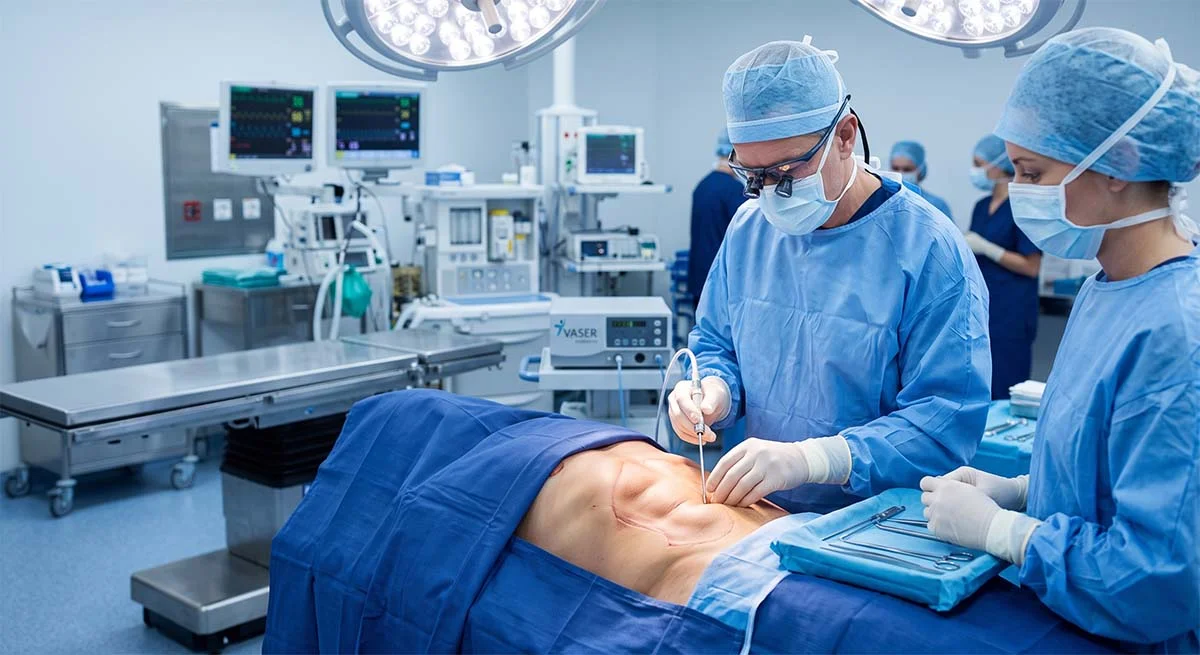
Abdominal etching is performed in a fully equipped hospital licensed by the Ministry of Health, with an anaesthesia team present. The operation is done under general anaesthesia and takes 2 to 4 hours on average.
Surgical Techniques Used
- Ultrasound-assisted liposuction: The fat is loosened with ultrasound energy before it is suctioned out; this preparation may allow gentler work around the surrounding blood vessels and connective tissue. It is one of the methods frequently used to carve out the muscle shadows precisely.
- Laser liposuction: Cannulas that use laser energy can be used, when needed, to help loosen the fat.
- Power-assisted liposuction (PAL): Motorised systems that make the cannula vibrate can be used, when needed, to help remove the fat.
During the procedure, the surgeon thins the fat in the natural grooves where the muscle tendons meet, while leaving a little tissue over the muscle itself to create a natural sense of volume. Rather than an artificial look, the aim is an appearance that is in keeping with your own muscle anatomy.
How Does Abdominal Etching Differ from a Tummy Tuck?
Many people confuse these two procedures, but their techniques and the patients they are intended for are quite different. Compared with traditional cosmetic operations, abdominal etching is more targeted and focuses on refining contours.
Feature | Abdominal etching (HD lipo / six-pack) | |
Main aim | To bring out the muscle lines and aim for an athletic look | To cut away sagging skin and tighten loose muscles with stitches |
Incision and scar | Liposuction entry points a few millimetres long (minimal scarring) | A long horizontal scar low on the abdomen, above the pubic area |
Suitable candidates | Fit people with little fat and firm skin | People with sagging skin after major weight loss, or with body changes after childbirth (mommy makeover) |
Recovery time | Short (back to social life within 1–2 weeks) | Moderate to long (3–4 weeks of rest) |
Recovery and Aftercare
What does recovery look like after abdominal etching? Because this is a surgical operation, following your surgeon’s instructions closely is critical to the quality of the final result.
- The first week: Mild to moderate pain, bruising and swelling in the first days after the operation are entirely normal. Pain is controlled with the prescribed painkillers.
- Compression garment: Special medical compression garments are worn so that the spaces created during surgery close evenly, the swelling drains away and the new muscle lines settle. The garment must be worn continuously for 4 to 6 weeks.
- Physical activity: Light walks are recommended in the first days to boost circulation. You should usually wait 4 to 6 weeks before returning to heavy training and cardio.
- Final results: Although the muscle lines can be seen straight after the operation, it can take 3 to 6 months for the swelling in the tissues to settle completely and for the skin to fit fully over the muscles.
During recovery, lymphatic drainage massage, when your doctor recommends it, can help the swelling go down faster.
How Long Do the Results Last?
How well the result is maintained depends largely on your lifestyle after surgery. The fat cells removed from the sculpted areas do not come back, so it is harder for fat to build up there again to its former level.
If you gain a lot of weight, however, the remaining fat cells can expand, cover the defined muscle lines and spoil the look. Results vary from person to person. To keep the result, people who have had six-pack surgery need to:
- follow a balanced, protein-rich diet;
- make regular exercise part of their lives;
- drink enough water.
What Are the Risks?
As with any surgery, abdominal etching carries some risks that should be considered before and after the operation. Possible complications include infection, asymmetry, irregular contours, seroma (a collection of fluid) and loss of sensation.
To reduce these risks, it is important that the operation is planned by a plastic surgeon experienced in body contouring. Whether the muscle lines look natural rather than artificial depends on choosing the right candidates, planning that suits the person’s own muscle structure and following the advice given during recovery.
In short, abdominal etching is one of the options that can be considered for suitable candidates who want a more athletic, defined abdomen.
Travelling to Istanbul, Turkey, for Abdominal Etching
Before you travel, you can send photos on WhatsApp for a preliminary assessment, and the plan is then given to you in writing; to start planning, contact us. The examination and the operation plan are made in person in Istanbul, and the operation takes place in a fully equipped hospital licensed by the Ministry of Health. For abdominal etching, plan to stay in Istanbul for at least 7 nights; your surgeon decides when you are fit to fly home. After you return home, follow-up continues with photo reviews on WhatsApp, and your medical records are given to you in English.
Frequently Asked Questions about Six-Pack Surgery
Does six-pack surgery create abdominal muscles?
No. The muscle lines are made visible by thinning the layer of fat over the muscles you already have; the more developed the muscles are, the more defined the lines look. That is why regular exercise is an important part of the result, both before and after surgery.
How long does abdominal etching take?
The operation is performed under general anaesthesia and usually takes 2 to 4 hours. The time depends on the size of the area treated, whether areas such as the waist and flanks are added to the plan, and the technique used. Your hospital stay and discharge are planned at the examination.
When can I go back to sport after abdominal etching?
Short walks start in the first days and are recommended because they support circulation. You usually need to wait 4 to 6 weeks before returning to heavy training and cardio; this period coincides with the time you wear the compression garment. When you can return to sport is decided at your check-ups, according to how you are healing.
What determines the cost of abdominal etching?
The fee depends on the size of the area to be treated (the abdomen alone, or together with the waist and flanks), the technique, the length of the operation and the anaesthesia, the length of the hospital stay, and supplies such as the compression garment. That is why the fee is set at the examination, once your personal plan is clear. For patients insured under the Turkish social security system (SGK): cosmetic operations are not covered by SGK.
Consultation and Appointments for Abdominal Etching
At the examination, the structure of your abdominal muscles, the thickness of the fat layer, your skin elasticity and your expectations are assessed, and you discuss whether abdominal etching, liposuction or a tummy tuck is right for you. Op. Dr. Ayberk Akçay is a specialist in plastic, reconstructive and aesthetic surgery, a Fellow of the European Board of Plastic, Reconstructive and Aesthetic Surgery (EBOPRAS) and a full member of the Turkish Society of Plastic, Reconstructive and Aesthetic Surgeons. His practice is in Teşvikiye, Şişli, Istanbul; for his training and memberships, see the page about Dr. Akçay. To book a consultation, please get in touch through the contact page.